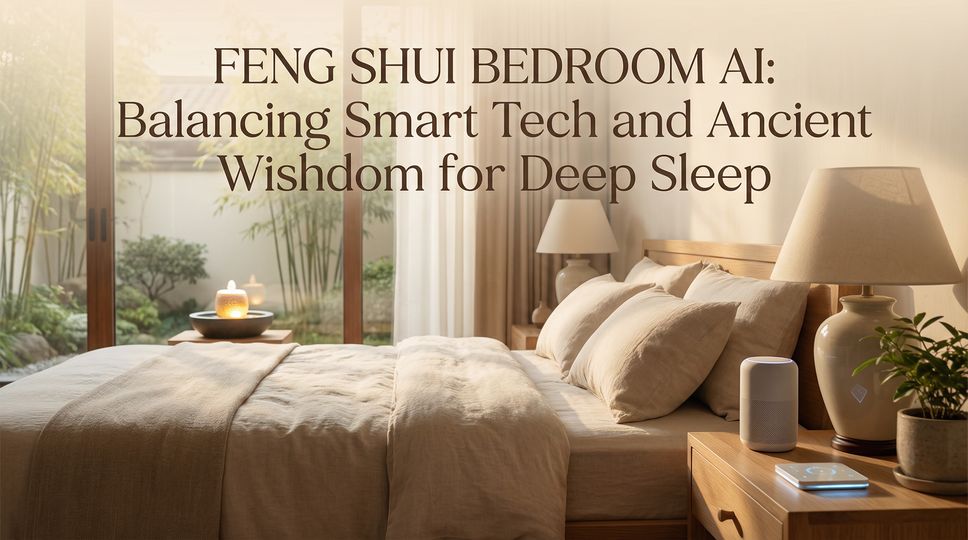
Feng Shui Bedroom AI: Balancing Smart Tech and Ancient Wisdom for Deep Sleep
In the rapidly evolving world of interior design, two seemingly opposing forces are colliding: the ancient Chinese practice of Feng Shui and the futuristic capabilities of Artificial Intelligence (AI). You might be wondering, how do these two interact? Can a 3,000-year-old philosophy coexist with the algorithms of the 21st century?
Welcome to the modern sanctuary.
As we increasingly invite AI into our lives—from generative design apps helping us visualize layouts to smart speakers sitting on our nightstands—we face a unique energy challenge. This post explores the concept of "Feng Shui Bedroom AI," guiding you on how to utilize technology to build your perfect room while ensuring that the "Artificial" doesn't overpower the spiritual and restful Chi of your sleeping space.
The Intersection of Algorithms and Energy
Feng Shui is fundamentally about the flow of energy (Chi) and how our environment affects our well-being. AI, in the context of home design, offers precision and personalization. When we combine them, we get a powerful approach to bedroom design, provided we maintain the right balance.
Using AI for Feng Shui isn't just about asking a chatbot where to put the bed. It is about understanding how modern tools can help us implement ancient laws of spatial arrangement, and conversely, how Feng Shui rules apply to the modern "smart bedroom."
Part 1: Using AI as a Design Tool
Before we talk about the electronics in your room, let’s look at how AI can help you create the room. Generative AI design tools and interior design apps are becoming incredible assets for DIY Feng Shui enthusiasts. Here is how to leverage them:
1. Visualizing the Command Position
One of the non-negotiables in a Feng Shui bedroom is the Command Position. This places your bed diagonally across from the door, giving you a clear view of the entrance without being directly in line with it (the "coffin position").
Sometimes, visualization is difficult in oddly shaped rooms. You can upload a photo of your room to AI-powered interior design apps and ask them to generate layouts that prioritize the Command Position. This allows you to see if your furniture fits before you do the heavy lifting.
2. Color Theory and the Bagua Map
AI is exceptional at generating color palettes. If you know which area of the Bagua map your bedroom falls into (e.g., the Love and Relationships corner, which benefits from pinks and earth tones), you can prompt an AI tool to:
*"Generate a calming bedroom color palette based on Feng Shui Earth elements, incorporating terracotta, soft beige, and warm lighting."
This helps you visualize the harmony of colors without buying paint samples first.
3. Decluttering Visualization
Clutter blocks the flow of Chi. New AI tools allow you to "digitally declutter" a photo of your room. Seeing your space clean and organized can provide the psychological motivation needed to make it a reality.
Part 2: The "Artificial" Danger: Managing Tech Qi
While using AI to design the room is beneficial, living with AI inside the room is a Feng Shui challenge.
In Feng Shui, a bedroom should be a Yin space—passive, quiet, dark, and restful. Technology, screens, and AI assistants (like Alexa, Siri, or Google Home) represent strong Yang energy—active, alert, loud, and stimulating.
Here is how to manage the "Feng Shui Bedroom AI" paradox:
1. The Smart Speaker Dilemma
Many people use AI smart speakers as alarm clocks. However, these devices are constantly "listening." On an energetic level, this creates a subtle vibration of alertness in the room.
The Fix: If you must have a smart speaker in the bedroom, place it as far away from the bed headboard as possible. Do not sleep with your head near an electrical outlet or an active data-transmitting device. Ideally, move the AI assistant to the kitchen or living room to keep the bedroom a disconnected sanctuary.
2. EMFs and Sleep Quality
Electromagnetic Fields (EMFs) are invisible energy lines emitted by our tech. In Feng Shui, we view this as a form of "noise" that disrupts the aura. Sleeping with a smartphone (the ultimate AI device) under your pillow or on the nightstand disrupts the body's natural repair cycles.
The Fix: Create a charging station outside the bedroom. If you use your phone for a meditation app, download the file, put the phone on Airplane Mode, and place it across the room.
3. The "Black Mirror" Effect
Large smart TVs or computer monitors act as mirrors when turned off. In Feng Shui, mirrors facing the bed are considered bad luck as they reflect energy back at you, causing restlessness and potentially inviting third parties into a relationship (symbolically).
The Fix: If you have screens in the bedroom, cover them at night with a beautiful fabric throw, or install them inside a cabinet that can be closed.
Part 3: Harmonizing Smart Lighting with Nature
Not all technology is bad for Feng Shui. In fact, "Smart Lighting" is one area where AI can enhance natural rhythms.
Feng Shui places high importance on lighting. Harsh, fluorescent overhead lights are jarring to the Chi.
How to use Tech for Good:
- Circadian Rhythm Syncing: Use smart bulbs that automatically adjust their color temperature based on the time of day.
- Morning: The light should mimic the rising sun (soft, warm, gradually brightening).
- Evening: As you approach sleep, the light should shift to warm ambers and reds, eliminating blue light.
By programming your bedroom lighting to mimic the natural solar cycle, you are using modern AI to reconnect with ancient natural rhythms.
The Human Element: Trusting Your Intuition
While we discuss the concept of a "Feng Shui Bedroom AI," it is vital to remember that Feng Shui is an art of feeling, not just calculation. An AI might tell you that a certain layout is mathematically perfect, but if walking into the room makes you feel anxious, the Feng Shui is off.
Your Body is the Ultimate Sensor.
After using AI tools to design your space or setting up your smart home gadgets, sit in the room. Close your eyes.
- Does the room feel heavy or light?
- Do you feel watched (by devices) or held (by the walls)?
- Is the air stagnant or flowing?
Conclusion: The Future of Rest
The future of the Feng Shui bedroom isn't about rejecting technology, but about mastering it. By using AI as a design assistant while strictly managing the presence of active technology in your sleeping quarters, you can create a space that is modern, beautiful, and profoundly restorative.
Quick Checklist for your Feng Shui AI Bedroom:
- Design: Use AI apps to test layouts before moving furniture.
- Detox: Ban cell phones and active smart assistants from the bedside table.
- Lighting: Automate lighting to follow the sun's natural warmth.
- Balance: Ensure the room remains a Yin sanctuary—soft textures, earth tones, and quiet energy.
Stay tuned for the next post in this series, where we will dive deeper into specific color palettes generated by AI for different Feng Shui elements!