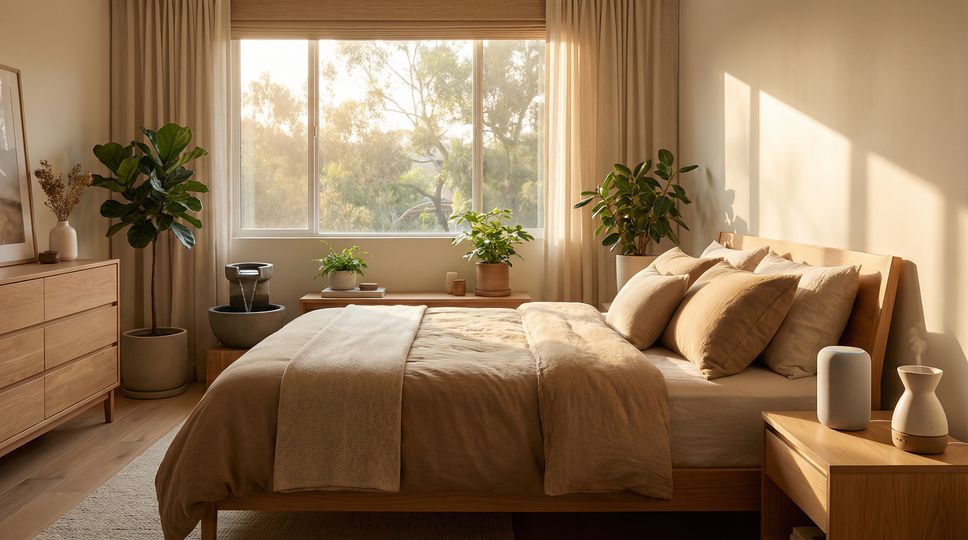
Feng Shui and AI: Harmonizing Smart Technology in Your Bedroom Sanctuary
In the world of interior design, two concepts seem diametrically opposed: the ancient practice of Feng Shui, which seeks to harmonize individuals with their surrounding environment, and Artificial Intelligence (AI), the pinnacle of modern, automated convenience.
Traditionally, a Feng Shui expert would advise removing all electronics from the bedroom to preserve the peaceful Yin energy required for sleep. However, we live in a digital age. From smart sleep trackers to voice-activated lighting and AI-driven climate control, technology has moved into our sleeping quarters.
Can you maintain good Feng Shui while embracing the 'smart home' revolution? The answer is yes—if you are intentional. Here is your guide to navigating the intersection of Feng Shui, bedroom design, and AI technology.
The Clash: Yin Energy vs. Active Tech
To understand how to balance this, we must first understand the energetic conflict.
- The Bedroom (Yin): This space requires soft, passive, dark, and quiet energy to promote restorative sleep and intimacy.
- AI & Electronics (Yang): Devices represent active energy. They emit light, sound, and electromagnetic fields (EMFs). In Feng Shui element theory, electronics are often associated with the Fire element (activity/stimulation) or Metal (rigidity/conductivity).
Unchecked technology in the bedroom creates an excess of Yang energy, leading to restlessness, insomnia, and anxiety. The goal of integrating AI is to use it to enhance the Yin environment, not disrupt it.
1. Leveraging AI for Circadian Lighting
One of the most powerful ways AI can actually improve your bedroom Feng Shui is through smart lighting systems.
Light is a manifestation of Qi (energy). Harsh, blue-spectrum lighting mimics daylight and keeps your brain active.
The Feng Shui AI Solution:
- Automated Rhythms: Use smart bulbs (like Philips Hue or distinct AI-driven systems) programmed to mimic the sun. Have the lights automatically shift to warm, amber tones (Fire/Earth energy) as the evening progresses.
- The Gentle Wake-Up: Instead of a jarring alarm clock (which shatters tranquility), program your AI lights to simulate a sunrise. This aligns with natural biological rhythms, promoting a smoother transition from the Yin of sleep to the Yang of the day.
2. The Smart Speaker Dilemma: Placement Matters
Voice assistants (Alexa, Siri, Google Home) are convenient, but they are constantly "listening" devices connected to the cloud. Energetically, this creates a subtle sense of being monitored, which can impede deep relaxation.
Feng Shui Placement Tips:
- Distance from the Crown: Never place a smart hub or AI device on your nightstand directly next to your head. This is the area of the "Crown Chakra." Keep active electronics at least 3 to 5 feet away from the bed.
- Corner Command: Place the device diagonally across from the bed. If possible, keep it out of the direct line of sight when you are lying down.
- The Mute Function: Energetically, it is vital to feel you have privacy. Get into the habit of pressing the physical "mute" button on microphones before you go to sleep.
3. Managing the "Black Mirror" Effect
Smart screens, whether they are attached to a smart bed, a wall-mounted hub, or a television, act as mirrors when they are turned off. In Feng Shui, mirrors facing the bed are considered taboo because they reflect energy back and forth, doubling the activity in the room and potentially inviting third-party interference in relationships.
The Solution:
- Digital Art Mode: If your device supports it, use an "ambient mode" that displays soft, natural imagery (like landscapes or mist) rather than a black void or bright information ticker.
- Physical Covers: For smaller devices with cameras or screens, consider a tasteful cloth covering or a sliding screen for the nighttime hours.
4. EMFs and Energy Flow
Even if a device is "smart," it emits Electromagnetic Fields (EMFs). High levels of EMFs are believed to disrupt the body’s natural energetic field.
Practical Tips:
- Smart Beds: If you have an AI-powered mattress that tracks sleep or adjusts temperature, ensure the Wi-Fi radio can be scheduled to turn off while you sleep. Let the bed record data locally and sync it in the morning.
- Cable Management: AI devices require power. A tangle of cords creates visual and energetic clutter (Sha Qi). Use cable organizers to keep cords hidden and streamlined. Chaos in your wires leads to chaos in your rest.
5. Programming "Do Not Disturb" as a Ritual
Feng Shui is deeply rooted in intention. You can use AI to enforce your boundaries.
Create a "Sleep Sanctuary" routine in your smart home app:
- 9:00 PM: Blue light filters turn on; brightness drops to 40%.
- 10:00 PM: Wi-Fi to non-essential devices cuts off (if your router supports this).
- Notifications: All audible notifications are silenced.
By automating these boundaries, you use the Yang power of AI to protect the Yin sanctity of your sleep.
Conclusion: Tech as a Servant, Not a Master
The key to successful "Feng Shui Bedroom AI" design is mindfulness. Technology should serve your well-being, not dominate your space. By placing devices thoughtfully, managing light spectrums, and respecting the energetic need for darkness and quiet, you can create a modern bedroom that is both smart and soulful.