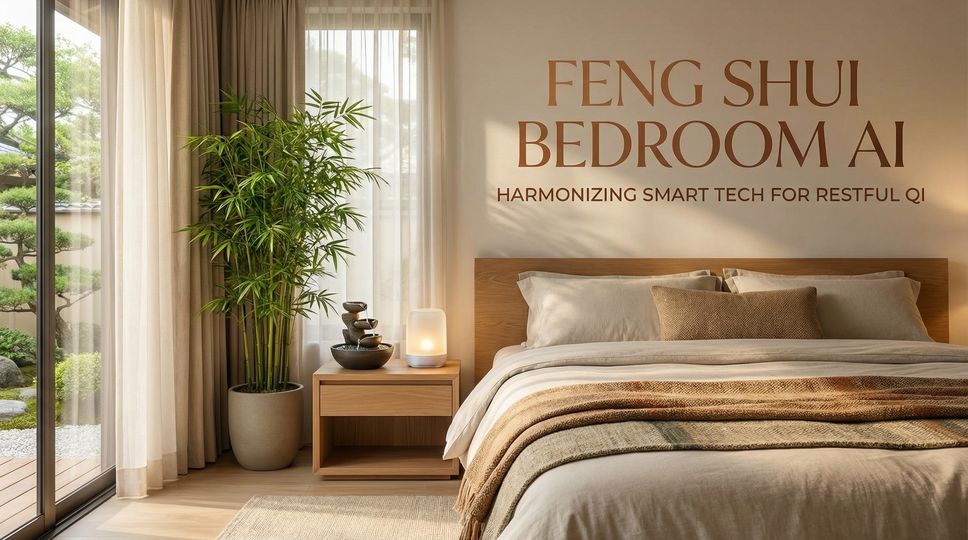
In the traditional practice of Feng Shui, the bedroom is the most critical room in the home. It is a sanctuary of Yin (passive, restful) energy, designed to recharge our bodies and spirits. Traditionally, Feng Shui masters have advised against keeping electronics in the bedroom, citing electromagnetic fields (EMFs) and the stimulating 'Yang' nature of devices as major disruptors of sleep.
However, we are living in the digital age. Our homes are becoming smarter, and Artificial Intelligence (AI) is integrated into our daily routines. As we explore part three of our series on modern Feng Shui, we address a unique challenge: Can you have a 'Feng Shui Bedroom' that utilizes AI without destroying the peaceful vibe?
The answer is yes—but it requires intentionality. Here is how to harmonize high-tech with high-rest.
The Conflict: Yang Tech vs. Yin Sleep
To understand how to integrate AI, we must first understand the conflict. Electronic devices—smart speakers, phones, monitoring sensors—emit energy. In Feng Shui, this is often categorized as:
- Active Qi (Yang): The energy of movement, sound, and light.
- EMF Disturbance: Invisible fields that can subtly disrupt the body's natural energetic field (or aura).
- The 'Black Mirror' Effect: Screens that reflect the room acts like mirrors, which are traditionally discouraged facing the bed as they are thought to bounce energy around, preventing deep rest.
If you simply fill your bedroom with blinking lights and always-listening microphones, you create a space of constant alertness, which is the enemy of sleep. However, if used correctly, AI can actually enhance the Feng Shui of a room by automating the environment to perfectly suit your biological needs.
Using AI to Enhance Environmental Qi
Instead of viewing technology as the enemy, we can view AI as a tool to manipulate the environment to simulate nature. Here are three ways AI can actually improve your bedroom's Feng Shui:
1. Circadian Rhythm Lighting
Light is one of the strongest manifestations of Qi (Chi). Harsh, blue-tinted LED lights suppress melatonin and trick the brain into thinking it is midday (Yang time), even at midnight.
The AI Solution: Use smart bulbs coupled with AI assistants (like Alexa, Google Home, or Apple HomeKit). Program them to mimic the sun.
- Morning: Program a 'sunrise' effect where lights gradually brighten with cool tones to wake you gently.
- Evening: Set an automation for sunset. The AI should shift the lighting to warm, amber, or red tones and dim them automatically two hours before bed.
This alignment with natural cycles is the essence of Taoist living—flowing with nature rather than fighting it.
2. Regulating Air Quality (Wind Qi)
'Feng Shui' literally translates to 'Wind and Water.' The quality of the air you breathe while sleeping is paramount to your health and fortune.
The AI Solution: Smart air purifiers. Modern devices use AI to constantly monitor particulate matter and VOC levels. They automatically adjust fan speeds to maintain purity without you needing to intervene. This ensures that the 'Wind' in your room is fresh and stagnant energy is cleared, all while keeping the noise level (decibels) low to protect the Yin atmosphere.
3. Soundscapes for Energy Clearing
Stagnant silence can sometimes be as heavy as loud noise. In Feng Shui, sound clearing is often used to break up heavy energy.
The AI Solution: Use your smart speaker to generate 'Pink Noise' or nature sounds (flowing water or rain). Unlike a TV which creates a narrative your brain has to follow, AI-generated soundscapes create a consistent, protective audio bubble that masks jarring outside noises (like traffic), preserving the sanctuary of the room.
The Rules of Engagement: Placement and Boundaries
While the utility of AI is clear, the placement of the physical devices is where the Feng Shui strictures come back into play. To keep the bedroom balanced, follow these guidelines:
The 3-Foot Rule
Never place a smart hub, Wi-Fi extender, or phone directly on your nightstand next to your head. The electromagnetic field is strongest at the source.
- Feng Shui Tip: Create a 'Tech Station' across the room, ideally diagonally from the bed. This keeps the EMFs away from your Crown Chakra while you sleep, but allows the device to still function for alarms or voice commands.
The 'Black Screen' Cover
If you have a device with a screen (like a smart hub display), do not let it face the bed directly. The reflection is unsettling to the subconscious.
- Feng Shui Tip: Use the device's 'Night Mode' to turn the screen completely off (not just dim). If it has a camera, physically cover it. The psychological feeling of being 'watched' is detrimental to the sense of safety required for deep sleep.
Voice Command vs. Phone Scrolling
The biggest enemy of bedroom Feng Shui is the smartphone. It is a portal to the outside world, work stress, and social comparison.
- Feng Shui Tip: Use an AI speaker for your needs (setting alarms, checking weather, playing music) so that you can physically banish your phone from the bedroom. Voice commands allow you to control your environment without visually engaging with a screen, keeping your mind in a more meditative state.
Digital Decluttering: The Invisible Energy Leaks
In our previous posts, we discussed physical clutter. But in a smart home, digital clutter is a real Feng Shui issue.
If your AI assistant is constantly dinging with notifications, or if your smart lights are glitching, this creates frustration and 'shar chi' (poison arrows) of stress.
- Do Not Disturb (DND): Program your AI to go into DND mode automatically at 9:00 PM. No notifications should enter the sanctuary.
- Simplify Automations: Complex tech setups that require troubleshooting break the flow of the room. Keep it simple. If it doesn't work 100% of the time, remove it from the bedroom.
Conclusion: The Balanced Sanctuary
The goal of Feng Shui is not to live in the past, but to live in harmony with our present environment. An 'AI Bedroom' does not have to be a cold, sterile sci-fi hub. By using technology to mimic natural light patterns, purify the air, and remove the need for physical interaction with screens, you can actually create a space that feels more organic and restful.
Remember the core principle: You are the master, the tech is the servant. Ensure your AI supports your rest, rather than dominating your attention.
Stay tuned for part 4 of our series, where we will look at the Feng Shui of Home Office setups in the era of remote work!